
Meet our Scientific Advisory Board: Fiona Polack
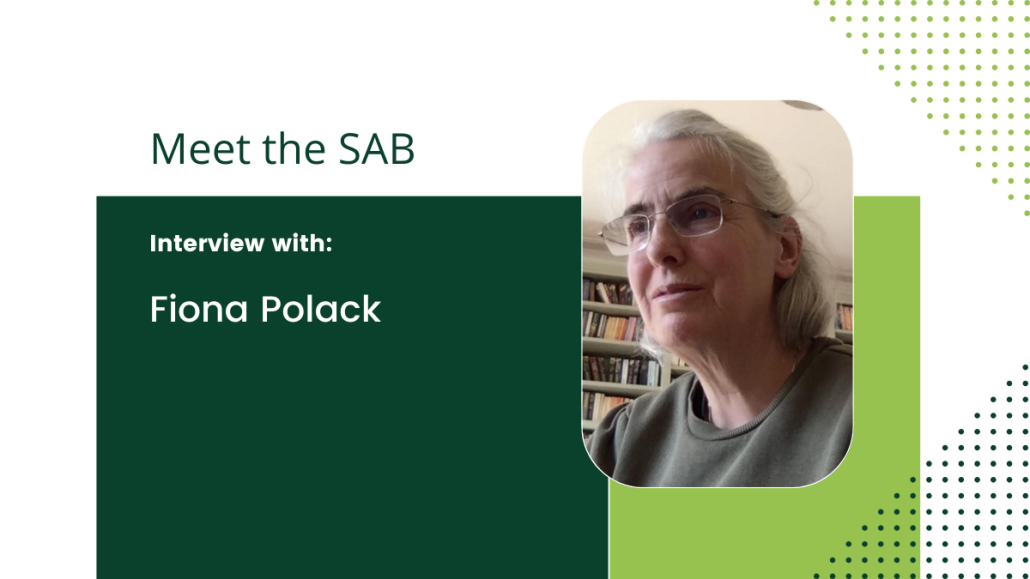
Professor Fiona Polack – Professor and Head, School of Computer Science, University of Hull.
An academic software engineer specialized in the development and evaluation of fit-for-purpose models and simulations. With expertise in systems-of-systems and digital twins, she focuses on ensuring that models are demonstrably suitable for their intended design and use.
What is your field of expertise?
I am an academic software engineer. I have developed software specification techniques in a range of paradigms, and have focused on engineering of demonstrably fit-for-purpose models of systems-of-systems and simulations of complex systems. Most of my work relates to models of behaviour and to the need to capture the basis for belief that a computer model is fit for the purposes it is designed and used for (not always the same thing!). Our work ranges from engineering and evaluation of agent models used alongside lab research, to digital twins that are digital analogues of social and socially-situated systems.
What do you expect from PREMIER?
My role on the SAB relates specifically to the tool/database, so since the demise of Simomics, I have been available to consult on the way forward. Whilst I find the main work of PREMIER fascinating, it is strictly outside my expertise and my role on SAB.
Why did you agree to be part of the SAB?
I had a long-standing research relationship with the academics who founded Simomics, the original partner creating the PREMIER database – and knew the developers, who I taught as students. Some of Simomics products drew on research I was heavily involved in. Having worked in teams exploring software engineering of simulations of complex biological systems, I was happy to be involved in PREMIER as a technical SAB member.
What do you think are the current gaps in the/your field that PREMIER could fulfil?
This is an interesting question to a computer science academic! There are many issues with long-term data capture, storage and management that are not well-understood, and are often ignored by both data experts and scientists alike. It is very easy to address the immediate database needs of PREMIER (this is not a particularly difficult data domain), but it is much harder to ensure the long-term use and maintenance of the database – which is something I was advising Simomics to explore before it folded. I think PREMIER needs to be very clear how the EU or IMI will manage the database generated by PREMIER, and support the intention of having a long term data resource on the environmental effects/management of APIs. The evolution of standards and procedures requires a flexible approach to data storage and access; if the database is to have value beyond the end of the project there needs to be a strong application interface (for developers) as well as a good user interface (for scientists depositing and accessing data). Data duplication causes many validity issues, and therefore the ability to integrate (as seamlessly as possible) with other resources is likely to be critical to the success of PREMIER (and the wider initiative on environmental damage) in the long term.
How could society at large benefit from the PREMIER products?
Expanding our understanding of how we damage the environment, and how that damage rebounds on us, is beyond important. The complexity of the wide range of interacting systems has to be communicated to the public and policy makers, so that simplistic, and often damaging, short term solutions are avoided. PREMIER’s work on evaluating and documenting APIs is only a small part of the problems facing the environment and people, but is an important step forward, with thought needed to ensure that the learnings are not lost.


